

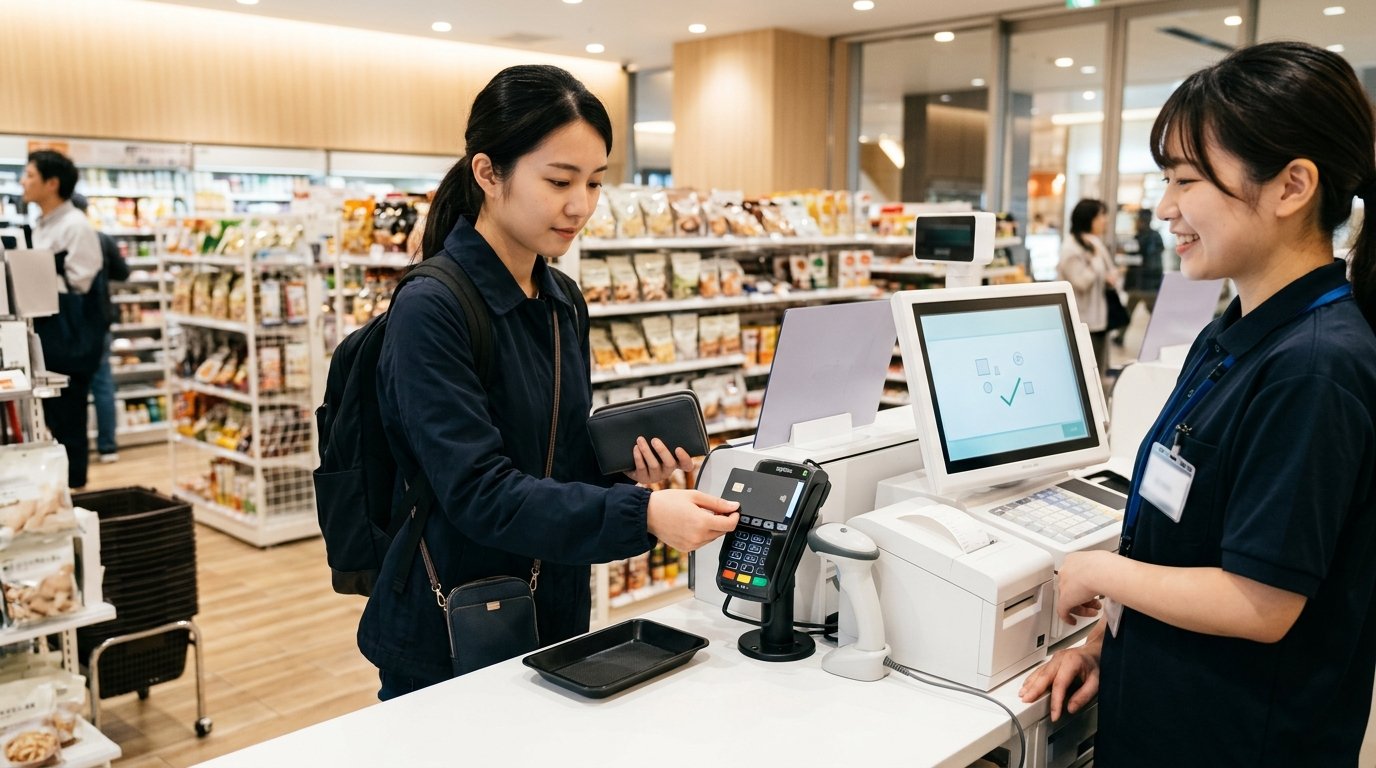
1. Planning a Practical Mix of Cash, Cards, and Backup Payment Methods
While cashless payment acceptance has grown rapidly across urban Japan, cash remains necessary for rural buses, shrine donation boxes, small temple entry fees, traditional vending machines, and coin-operated lockers. Carrying a balanced mix of Japanese Yen cash and major debit/credit cards is highly recommended.
2. Foreign-Issued Credit and Debit Card Compatibility
Major international card networks (Visa, Mastercard, American Express, JCB, UnionPay) are widely accepted at hotels, department stores, major supermarkets, and convenience stores. Notify your card issuer of travel plans in advance to prevent fraud blocks during your trip.
3. Withdrawing Yen from ATMs and Checking Issuer/Operator Fees
Yen cash can be withdrawn using foreign-issued debit or credit cards at 24/7 convenience store ATMs (such as Seven Bank ATMs in 7-Eleven) and Japan Post Bank (ゆうちょ銀行) ATMs. Fees include the local ATM operator fee plus your home bank’s foreign transaction/withdrawal charges.
4. Exchange-Rate Choices, Withdrawal Limits, Operating Hours, and Failed Transactions
When an ATM prompts you to choose between Dynamic Currency Conversion (DCC, charging in your home currency) or local Japanese Yen (JPY), choosing JPY typically results in lower conversion markup rates. If an ATM transaction fails, check card daily limits, 4-digit PIN entries, or contact your issuer.
5. IC Cards, Contactless Payments, and Smartphone Compatibility
Rechargeable IC cards (Suica, Pasmo, Icoca) double as convenient digital wallets for convenience stores, vending machines, and station kiosks. Contactless EMV tap payments (Visa/Mastercard contactless) are increasingly accepted on select transit lines and retail chains.
6. Tax-Free Shopping Rules Through October 31, 2026
For purchases completed on or before October 31, 2026, eligible short-term foreign visitors presenting an original passport at licensed tax-free shops receive an immediate 10% consumption tax deduction at the register. General goods and consumables (food, cosmetics) must meet minimum spending thresholds (typically 5,000 Yen or more), and consumables are sealed in tamper-evident bags.
7. Refund-Method Tax-Free System Effective November 1, 2026
Starting November 1, 2026, Japan transitions to the departure refund system. Visitors purchase goods at standard tax-inclusive prices at retail stores. Upon departure at airports or ports, customs officials confirm the physical items and electronic purchase records before the consumption-tax-equivalent refund is processed by the store or designated refund operator via credit card, electronic payment, or cash.
8. Departure Customs Checks, Checked Baggage Sequence, Receipts, and Refund Arrangements
Under the post-November 2026 refund model, if you plan to pack tax-free goods into checked baggage, you must present the items to airport customs BEFORE checking your luggage with your airline. Always retain purchase receipts and follow official airport customs guidelines to ensure eligibility.
9. Lost Cards, Blocked Cards, and Emergency Payment Fallback Planning
If a payment card is lost or stolen, report it immediately to your card issuer’s 24/7 emergency international helpline. Keeping secondary cards stored separately from your primary wallet and securing emergency cash reserves ensures continuous funding throughout your trip.
EDITORIAL NOTE & DRAFT STATUS
This information is reviewed periodically. If service or product links are added in the future, they will be published only after availability and editorial checks.