

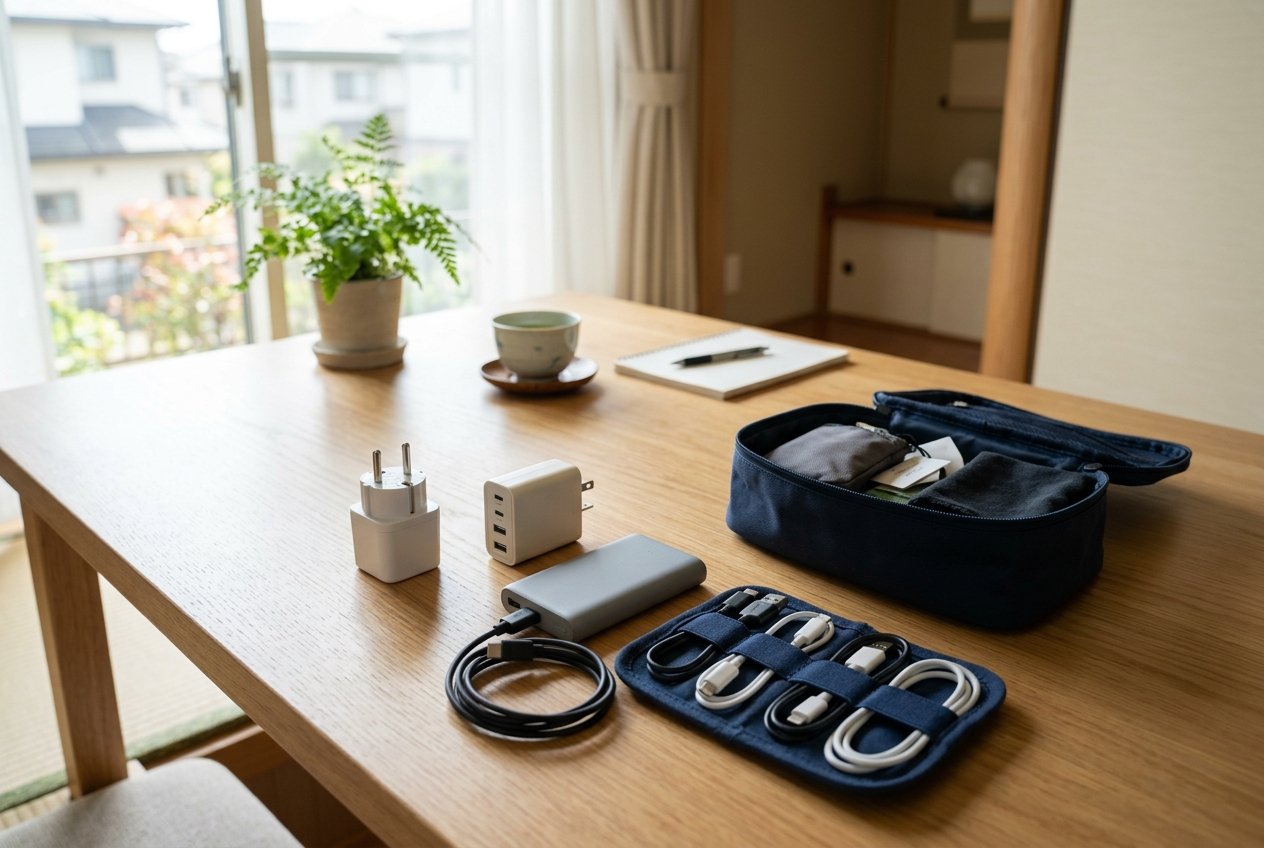
1. Electrical System Differences Between Japan and Europe
Japan standard household power runs at 100V with Type A two-prong outlets, whereas European destinations typically operate on higher voltage ranges (220V–240V) using Type C, SE, or other destination-specific plug standards. Checking these differences before departure helps reduce the risk of electrical damage.
2. Plug Adapters vs. Voltage Transformers
A shape adapter allows a Japanese Type A plug to physically insert into a European wall socket, but it does NOT convert voltage. Travelers should inspect the input label or official manual for every charger or appliance to check for dual-voltage support (e.g. 100V–240V). If the rating is uncertain, avoid plugging the device into foreign sockets.
3. Hotel Outlet Layouts and Pre-Departure Charging Inventories
European hotel rooms and older buildings may feature a limited number of wall outlets placed far from desks or beds. Preparing a multi-port travel charger can assist in powering multiple devices from available wall sockets.
4. Checking Current Airline Rules for Portable Power Banks (Updated Rules)
As of July 26, 2026, MLIT rules applying to flights departing from or arriving in Japan do not permit lithium-ion power banks in checked baggage. Travelers should verify current watt-hour (Wh), quantity, cabin-carry, and inflight-use conditions with MLIT and every operating airline immediately before travel.
EDITORIAL NOTE & DRAFT STATUS
This article is an editorial framework and guide. In accordance with our editorial standards, links will be added after availability and editorial checks.