

1. Room Drying Realities in Japan
Rainy days or pollen seasons force indoor air drying. Slow drying cycles invite bacteria that generate musty damp odors, requiring targeted air flow setup.
2. Selecting Folding X-Racks for Daily Storage
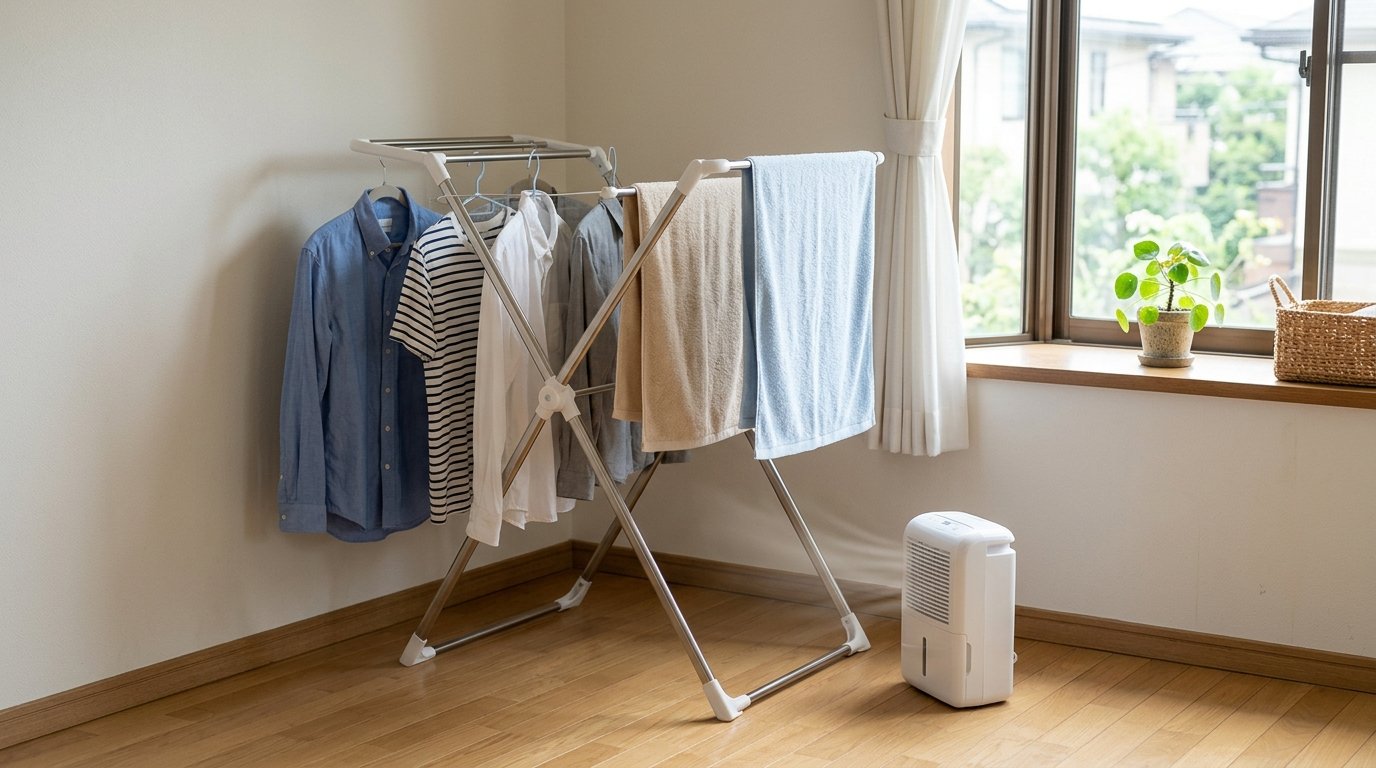
Permanently installed drying racks clutter living areas. Folding X-frame structures support full washing loads and collapse under 5cm thick to slip into wardrobe gaps.
3. Window-Frame Tension Poles for Sunlight Access
Window areas receive maximum natural solar radiation. Vertical window tension rods support long drying poles without scraping paint, drying sheets faster.
4. Speed Drying with Air Circulators and Dehumidifiers
Air stagnation blocks evaporation. Running an oscillating turbo circulator together with a quiet Peltier dehumidifier cuts drying time below four hours.
5. Selecting Anti-Bacterial Liquid Detergents
Normal washing liquids do not prevent indoor bacteria blooms. Antibacterial laundry detergents formulated for indoor drying suppress damp odors at the chemical source.
6. Sourcing Indoor Drying Accessories
Stainless X-racks and window-frame tension systems are stocked at general home centers, while air circulators and dehumidifiers can be sourced from electronic stores.
7. Connection to Balcony Drying setups
Our indoor routine integrates with outdoor balcony laundry frameworks, sharing windproof pins and hangers during transition shifts due to sudden downpours.
EDITORIAL NOTE & DRAFT STATUS
This article is an editorial framework and guide. In accordance with our editorial standards, links will be added after availability and editorial checks.