

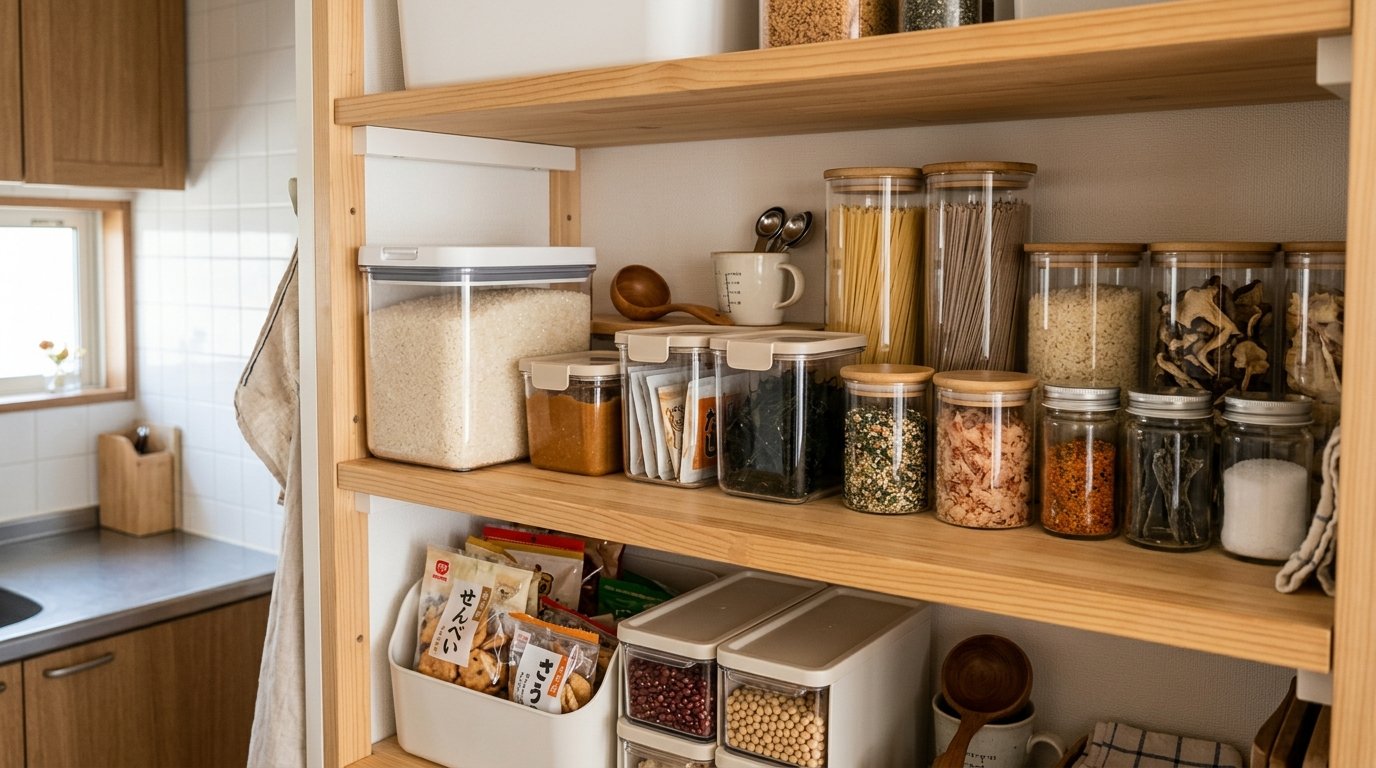
1. Pantry Footprints and Stock Layouts
Small pantry setups require disciplined layout planning. Sorting foodstuffs by usage frequency and category prevents duplicate purchases and declutters busy kitchen counters.
2. Managing Rice Storage and Kitchen Humidity
Storing rice in open bags exposes it to insects and moisture. Using an airtight rolling rice bin protects grains and fits neatly under sinks or inside deep lower cabinets.
3. Maximizing Cabinet Height with Shelf Extenders
High cabinets create wasted overhead spaces. Metal shelf extenders partition tall shelves, doubling your pantry storage capacity and making items easier to access.
4. Visual Expiration Rotation Methods
Stashing canned items deep in cupboards leads to expired foods. Placing modular baskets on shelves creates a clear rotation flow, keeping older stocks at the front.
5. Spice Containers and drawer Organization
Scattering spice jars across counters disrupts prep flow. Utilizing slide-out organizer trays inside stove drawers positions spices at an accessible angle for rapid cooking access.
6. Sourcing Pantry Organization Accessories
Pantry accessories are affordable. While 100-yen stores offer excellent bins and spice racks, premium moisture-tight dry canisters and rice dispensers are ideally selected at home centers.
7. Connection to Kitchen Dinnerware Systems
Pantry organization aligns with overall kitchen storage. Coordinating dried food canisters with your plate and cup layouts ensures a unified aesthetic and functional kitchen workspace.
EDITORIAL NOTE & DRAFT STATUS
This article is an editorial framework and guide. In accordance with our editorial standards, links will be added after availability and editorial checks.