

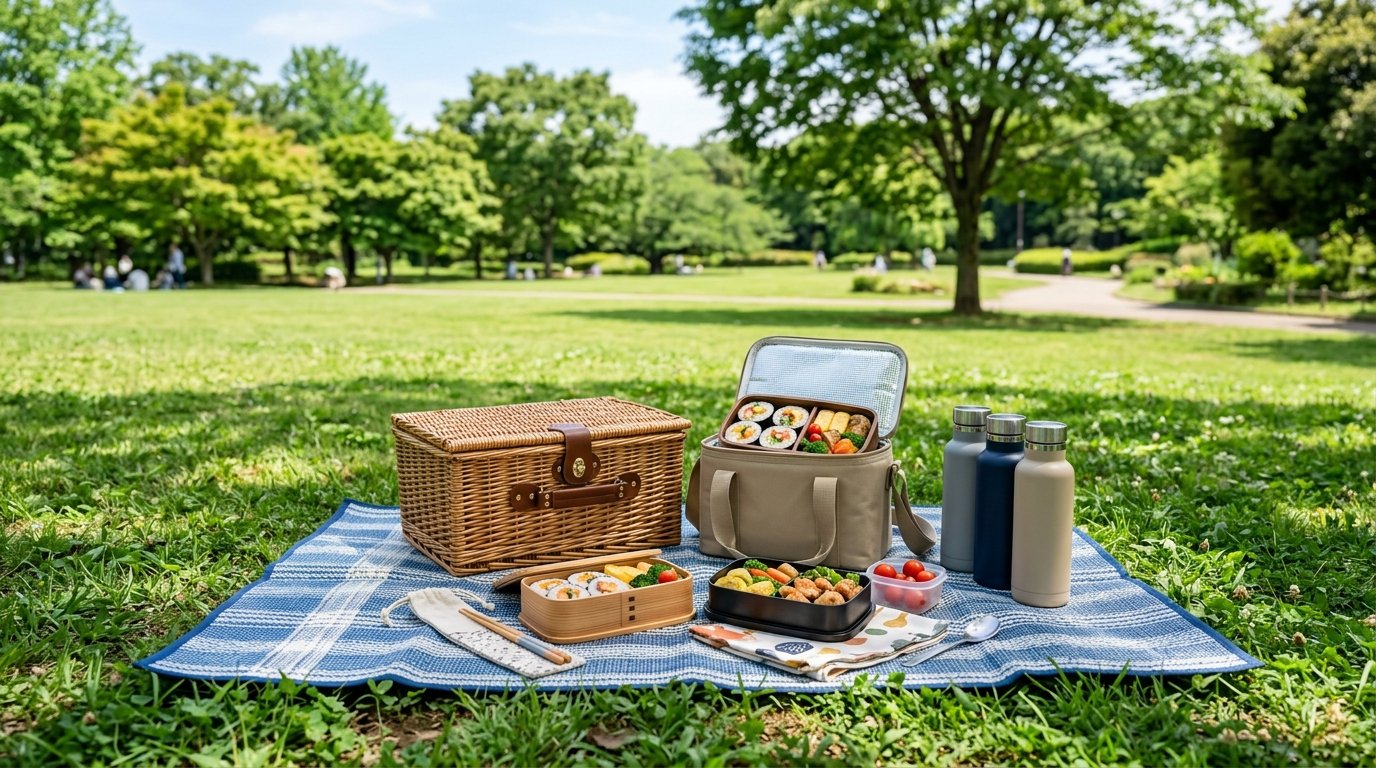
1. Picnic Culture and Park Rules in Japan
Spending weekends at Japanese parks requires awareness of local regulations. Many parks prohibit open fires or large tents, making compact, portable setups essential for comfortable outdoor leisure.
2. Cushioning sheets Against Damp Grounds
Morning dew or damp grass can ruin a leisure sheet. Selecting a cushioned folding picnic mat with a waterproof underside shields you from cold ground moisture and gravel discomfort.
3. Insulated Tote Bags for Food Preservation
High temperatures during warm seasons put home-cooked bento meals at risk. Transporting your meals in a zippered, insulated cooler bag alongside frozen ice packs maintains safe food storage temperatures.
4. Selecting Leak-Resistant Bento Boxes
Salad dressings or cooked dish juices can leak into bags during transport. Utilizing airtight lock-lid bento boxes with silicone seals ensures all liquids stay contained even on rough walks.
5. Tableware and hand Sanitization Routines
Public parks often have crowded or distant hand washing facilities. Bringing reusable flatware in a rattle-free travel case and using alcohol-free sanitizing wipes keeps mealtime hygienic.
6. Sourcing Picnic and Park Accessories
Durable insulated bags, stainless steel vacuum bottles, and lunchboxes can be sourced at Nitori or home centers, while leisure sheets and outdoor wet wipes are widely available at 100-yen shops.
7. Connection to Grocery Storage Setup
This picnic organization routine links with our Grocery and Meal Prep Storage Framework, making it simple to pack freshly prepped bento dishes directly into portable lunchboxes.
EDITORIAL NOTE & DRAFT STATUS
This article is an editorial framework and guide. In accordance with our editorial standards, links will be added after availability and editorial checks.