

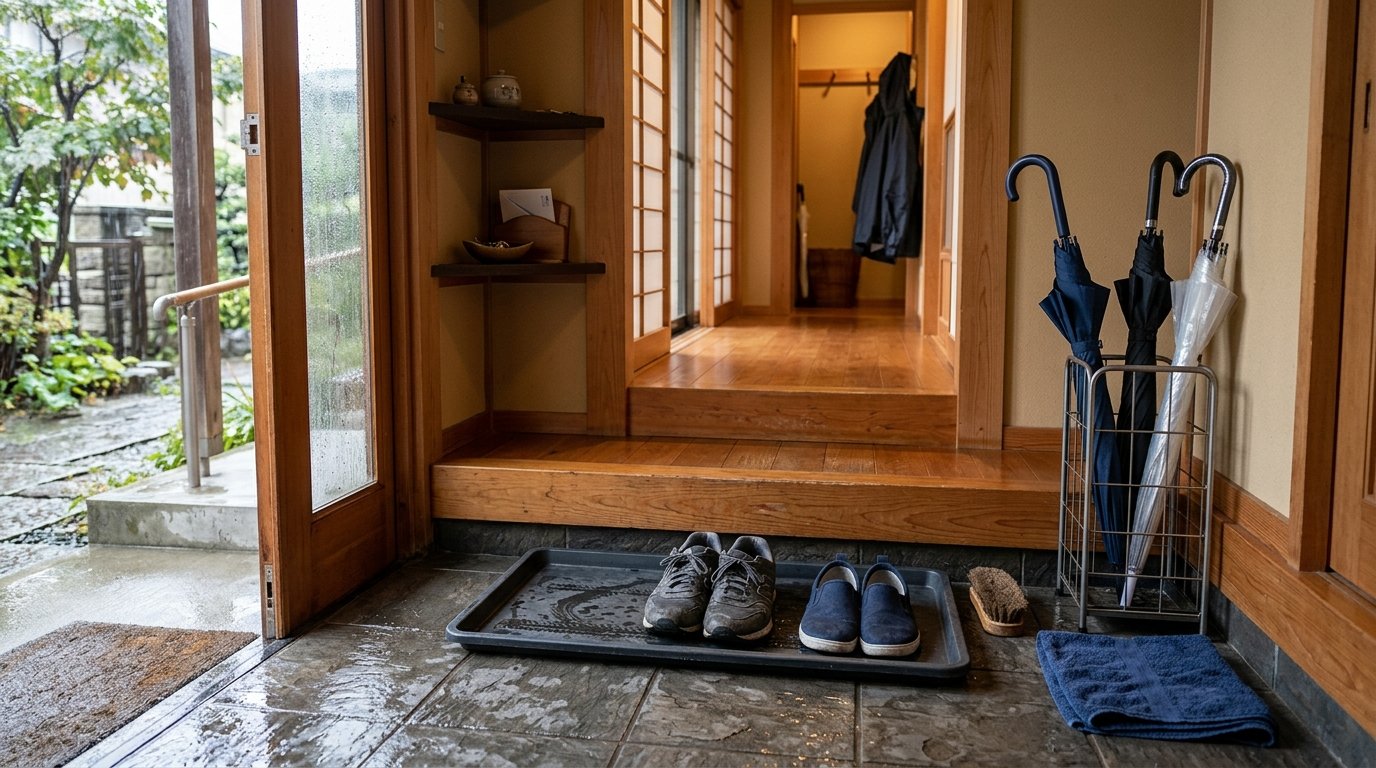
1. Zoning Wet and Dry Entryway Areas
Rainy commutes bring mud and water into your home. Allocating a wet zone on the lower tataki entryway prevents water tracks from reaching indoor wooden hallways.
2. Utilizing Magnetic Doors for Umbrellas
Wet umbrellas left leaning on walls create puddle problems. Magnetically mounting umbrella holders on steel entryway doors lifts wet gear off the floor, promoting dry surfaces.
3. Diatomaceous Earth for Wet Shoes
Wet shoes easily develop bad odors if not dried quickly. Inserting highly-absorbent diatomaceous earth drying plates pulls moisture out of shoes rapidly, preventing bacteria.
4. Outgoing Microfiber Wipe Stations
Damp bags and jackets bring rain moisture into living rooms. Hanging micro-fiber cloths near doors enables immediate wiping of wet gear upon return, stopping leaks at the entrance.
5. Entryway Shoe Brushing Routines
Accumulating dry dirt on shoe shelves ruins leather. Daily brushing with soft horsehair brushes cleans away street dust and mud before shoes are placed back on racks.
6. Sourcing Entryway Protection Items
Rain accessories are easy to source. While Nitori and Cainz offer durable magnetic stands and waterproof sprays, 100-yen stores carry excellent microfiber cloths and small shoe brushes.
7. Connection to Genkan Shoe Storage
Rain protection links directly with daily shoe storage. Integrating dry zones with vertical shoe stacking systems creates a cohesive, clean entryway environment.
EDITORIAL NOTE & DRAFT STATUS
This article is an editorial framework and guide. In accordance with our editorial standards, links will be added after availability and editorial checks.