

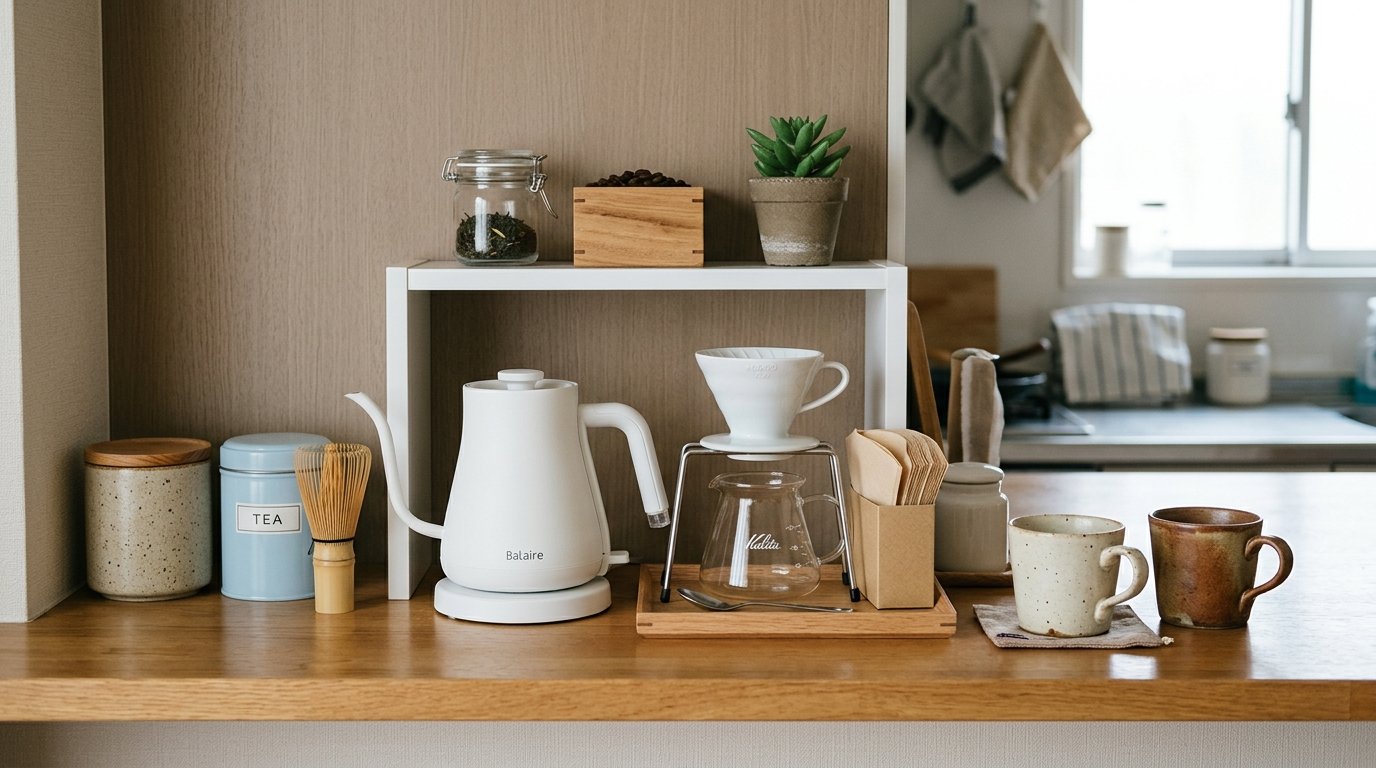
1. Designing the Drink Station
A dedicated beverage corner reduces layout friction. Setting up a small wooden stand or tray on kitchen counters groups cup stands and coffee filters together, preserving active meal prep space.
2. Kettle Placement and Power Safety
Electric kettles consume high electrical wattage. Positioning a gooseneck electric kettle near wall outlets, without sharing power strips with microwaves, ensures electrical routing safety.
3. Managing Tea and Coffee Freshness
Humidity destroys tea leaves and coffee beans. Storing tea leaves in tinplate canisters with airtight double-lids keeps moisture out, maintaining freshness and flavor.
4. Tray Routines for Serving
Carrying mugs individually increases spilling risks. Utilizing non-slip wooden serving trays lets you transport hot drinks and snacks in one trip, protecting tabletops from heat marks.
5. Drying and Storing Drinkware
Wet cups left on counters gather humidity. Hanging washed mugs on a vertical wire holder stand accelerates air-drying and occupies minimal space inside compact apartment kitchens.
6. Sourcing Tea and Coffee Items
Gooseneck kettles, servers, and wooden serving trays are available at department stores or Yamada Denki. Paper filter cases and tinplate canisters can be sourced at 100-yen stores.
7. Connection to Kitchen Prep Zones
This beverage setup connects with our Grocery and Meal Prep Storage Framework, matching kitchen canisters, airtight containers, and pantry layout flow.
EDITORIAL NOTE & DRAFT STATUS
This article is an editorial framework and guide. In accordance with our editorial standards, links will be added after availability and editorial checks.