

1. Choosing Between Forwarding, Storage, and Carrying Luggage
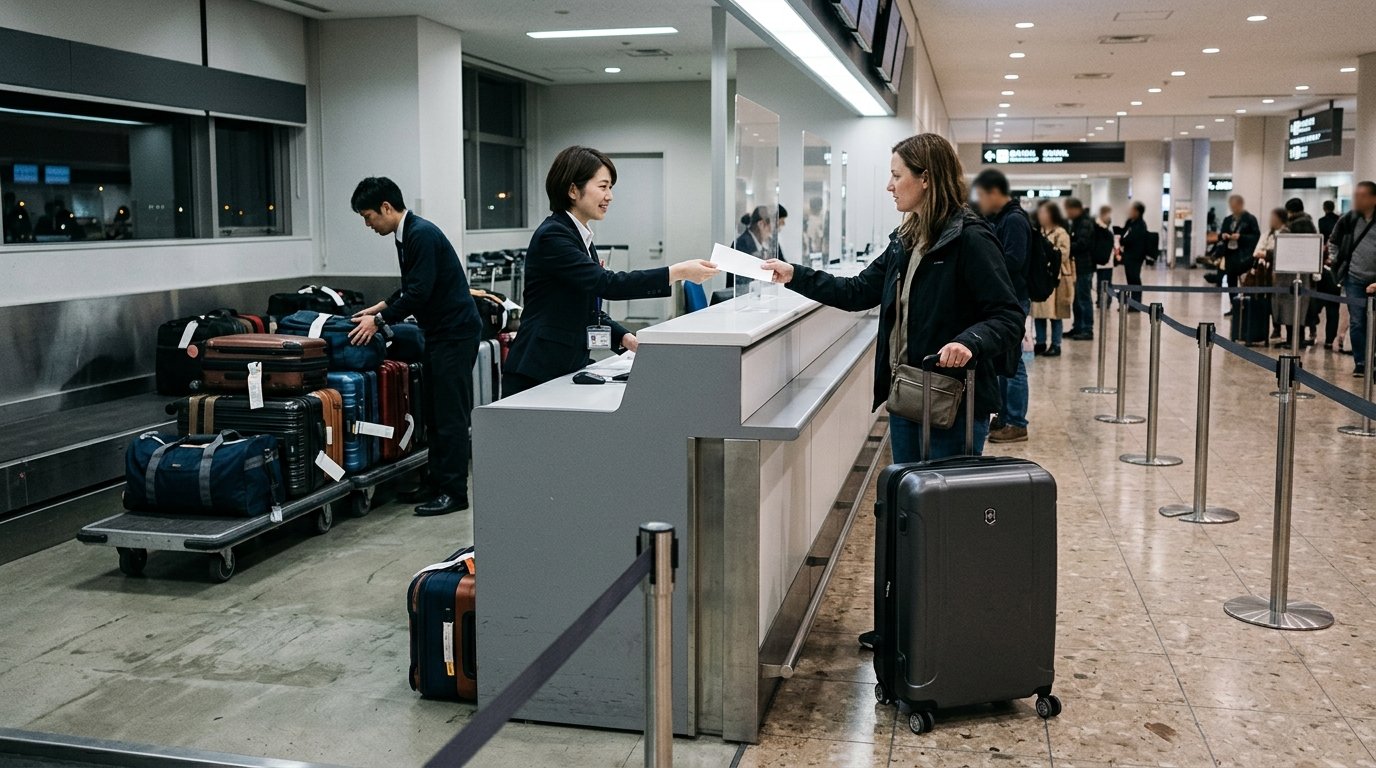
Traversing Japan’s crowded railway stations, narrow staircases, and busy train cars with multiple large suitcases can be challenging. Forwarding heavy bags directly to your next hotel or storing them at major transit hubs frees you to explore comfortably without blocking walkways.
2. Airport-to-Hotel and Hotel-to-Hotel Forwarding Systems
Luggage delivery counters (Takkyubin) operate in major airport arrival lobbies (e.g., Yamato Transport, JAL ABC, Sagawa Express). Most full-service hotels also process outbound luggage forwarding from their front desk, handling payment and pickup directly.
3. Lead Times, Cutoff Times, Delivery Dates, and Contingency Planning
Standard hotel-to-hotel or airport forwarding usually requires 1 to 2 days depending on distance and daily cutoff hours (often before 10:00 AM for same-day processing to next-day delivery). Always pack an overnight daypack with essential toiletries, medications, and clothes in case delivery takes longer.
4. Provider-Specific Size, Weight, Contents, and Destination Restrictions
Carriers establish strict maximum size (total linear length + width + height, often 160cm to 200cm) and weight limits (typically 25kg to 30kg per piece). Hazardous materials, cash, passports, fragile artwork, and oversized sport gear may require specialized handling or be refused under standard freight terms.
5. Preparing Destination Details and Completing Delivery Waybills
When filling out a delivery shipping form (Denpyo), specify the exact hotel name, full address, reservation check-in date, and primary guest name registered under the hotel booking. Hotel front desks use check-in dates and reservation names to accept and match incoming luggage.
6. Coin Lockers and Staffed Baggage Storage Counters
Major train stations offer matrixes of coin lockers accepting IC cards (Suica/Pasmo/Icoca) or 100-yen coins. During peak travel seasons, large-size lockers fill up quickly; staffed luggage storage counters or luggage storage mobile booking services serve as practical alternatives.
7. Coordinating Luggage with Trains, Shinkansen, Buses, and Flights
When boarding Shinkansen bullet trains, remember that luggage with total dimensions over 160cm requires an advance reservation for seats with an oversized baggage area. On highway express buses, check trunk luggage size limits before heading to the departure bus terminal.
8. Tracking Shipments, Retaining Receipts, and Handling Claims or Losses
Always retain your physical shipping receipt and tracking slip number. If a package is delayed or arrives damaged, present the tracking number to the delivery service customer office or hotel front desk immediately to initiate carrier trace and claim procedures.
EDITORIAL NOTE & DRAFT STATUS
This information is reviewed periodically. If service or product links are added in the future, they will be published only after availability and editorial checks.