

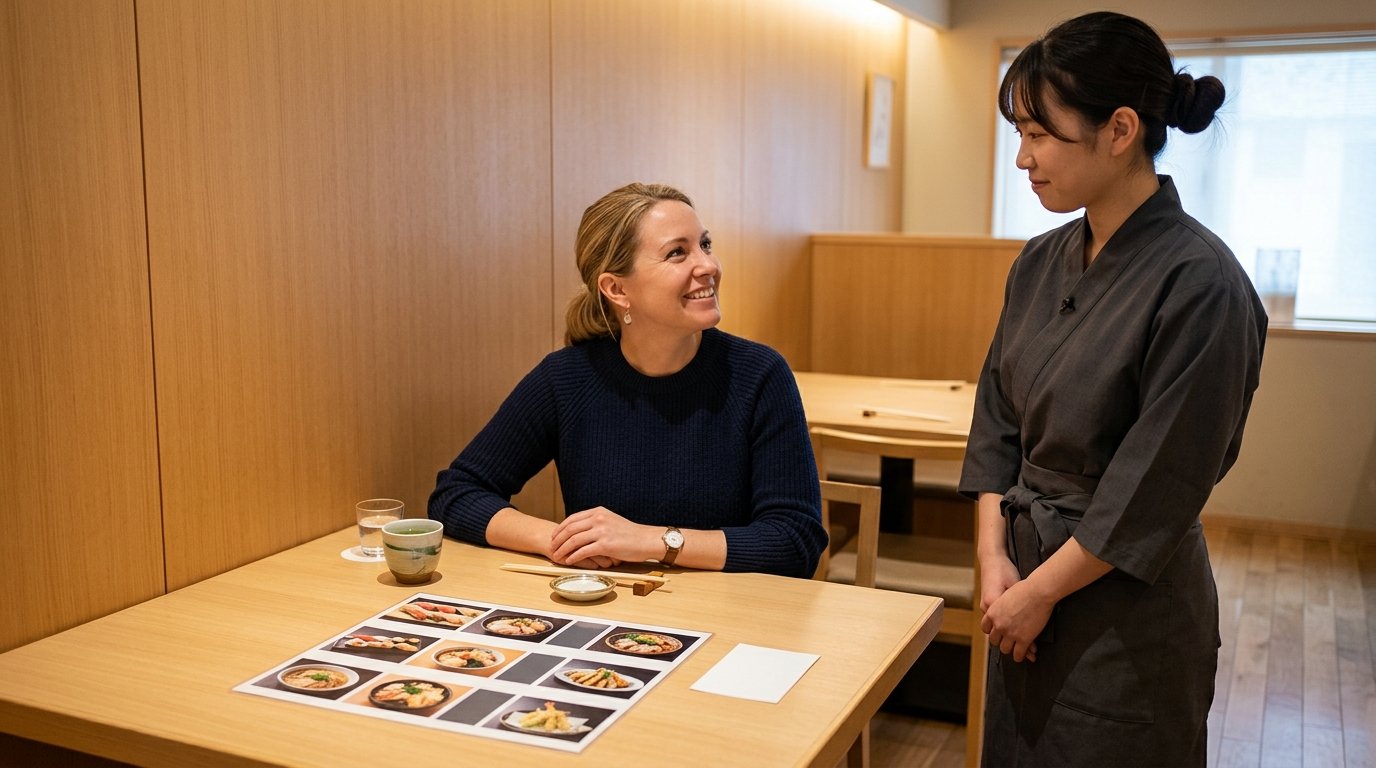
1. Common Restaurant Ordering Systems: Ticket Machines, Tablets, and Staff Ordering
Japanese restaurants utilize diverse ordering methods depending on establishment type. Casual noodle shops often use ticket vending machines (Shokkenki) at the entrance, izakaya and family restaurants favor multi-lingual counter tablets, and traditional eateries use verbal staff ordering.
2. QR Code Smartphone Ordering and Digital Menus
An increasing number of modern dining spots provide a printed QR code on your table. Scanning the code with your smartphone camera opens a web-based digital menu to select items, customize ingredients, and submit orders directly to the kitchen.
3. Payment Customs, Register Timing, and Table Charges (Otoshi)
Payment timing varies: ticket machines are paid upfront, while traditional restaurants issue a bill slip to pay at the front exit register upon leaving. At many izakaya pubs, a small appetizer (Otoshi) is served automatically and included on the bill as a standard seating charge.
4. Restaurant Reservations, Queuing Etiquette, and Cancellation Policies
Popular dining venues in urban areas often require advance reservations or paper waiting list sign-ins at the door. Respect queue lines without holding spots for late arrivals, and always inform restaurants promptly if your party size changes or if you must cancel.
5. Consumer Affairs Agency Food Allergy Regulations (9 Mandatory Specified Ingredients)
As of April 2026, Japan requires mandatory allergen labeling for nine specified ingredients on applicable packaged processed foods under Consumer Affairs Agency regulations: egg, milk, wheat, buckwheat, peanut, shrimp, crab, walnut, and cashew nut (added April 1, 2026). Rules and transition details should be rechecked against current official guidance.
6. Communicating Allergies, Dietary Restrictions, and Preferences Safely
Restaurant-prepared dishes are not subject to identical packaged-food labeling workflows. Preparing a written allergy communication card listing specific ingredients in Japanese assists communication with kitchen staff regarding dietary needs, Halal requirements, or vegetarian preferences.
7. Cross-Contact Limitations and Emergency Contact Escalation
General commercial kitchens share cooking utensils, fryers, and prep surfaces. Inquiring with staff cannot guarantee the total absence of trace cross-contact. If a severe allergic emergency occurs, dial 119 immediately for ambulance dispatch as detailed in our emergency medical guide.
8. Essential Dining Etiquette: Chopsticks, Water, and Tipping Customs
Tipping is not customary in Japan; excellent service is included in published prices or cover charges. Standard table etiquette includes placing chopsticks on rests (Chopstick-hashi-oki), avoiding upright chopstick placement in rice, and enjoying free cold water or green tea provided upon seating.
EDITORIAL NOTE & DRAFT STATUS
This information is reviewed periodically. If service or product links are added in the future, they will be published only after availability and editorial checks.